8 cybersecurity myths in 2026: The truth & practical solutions

In the era of the Generative AI explosion, the cybersecurity landscape globally and within Vietnam has undergone a pivotal transformation.
According to reports from the Authority of Information Security (AIS) as of early 2026, Ransomware attacks and Deepfake fraud have increased by 45% compared to the previous year. Despite this, many enterprises continue to operate based on obsolete security mindsets.

Below is a detailed analysis of the 8 most common cybersecurity myths and the reality behind them.
1. Myth: "Small businesses are not targets for hackers"
The Truth: Small and Medium Enterprises (SMEs) are often the preferred "gateways" for hackers due to weaker defensive systems.
2026 Reality: More than 60% of current cyberattacks target small businesses as a stepping stone to infiltrate the supply chains of larger corporations.
Solution: Implement periodic cybersecurity assessment services to identify vulnerabilities before they are exploited.
2. Myth: "Antivirus software alone provides enough safety"
The Truth: Traditional antivirus software only blocks known malware signatures.
Technical Analysis: Modern hackers utilize AI-driven Malware capable of self-modifying its source code to bypass standard firewalls and conventional antivirus layers.
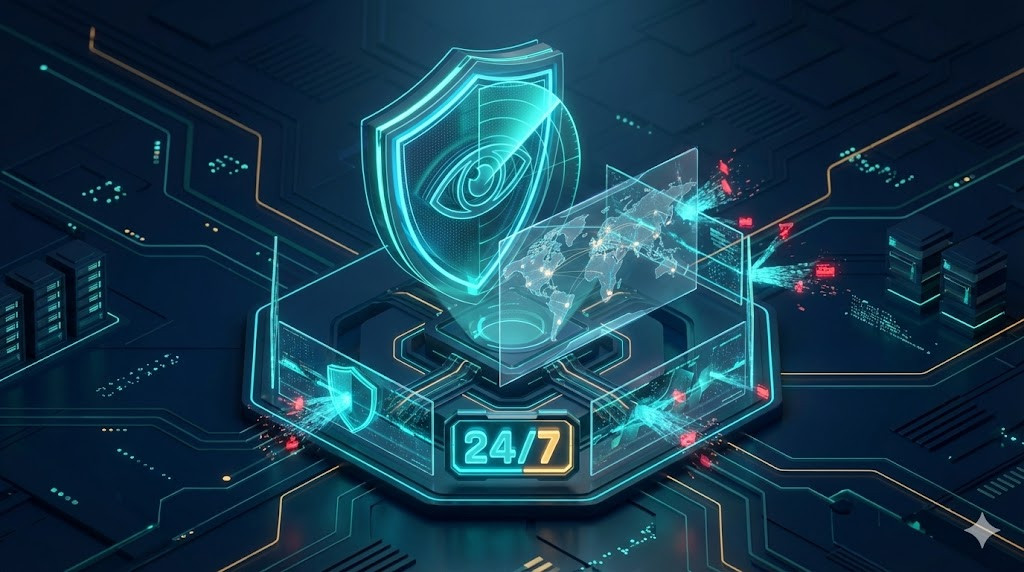
Solution: Equip your organization with EDR/XDR systems and 24/7 monitoring from professional SOC centers.
3. Myth: "A strong password is an impenetrable barrier"
The Truth: With the support of quantum computing and AI, even the most complex passwords can be cracked via Brute-force methods or Social Engineering.
Data Insight: 81% of data breaches are related to compromised passwords.
Solution: Apply Multi-Factor Authentication (MFA) and Zero Trust architecture (Never Trust, Always Verify).
4. Myth: "Threats only come from outside the system"
The Truth: Insider Threats—whether accidental or intentional—account for 34% of all data leaks.
Vietnam Context: Employees clicking on malicious links via social media remains a leading cause of information insecurity within local organizations.
Solution: Conduct cybersecurity awareness training and utilize Managed Security Services to enforce strict access controls.
5. Myth: "Cybersecurity is strictly the responsibility of the IT department"
The Truth: Information security is every individual's responsibility and a vital survival strategy for leadership.
E-E-A-T Standard: An organization with solid infrastructure but staff who lack response skills remains a fragile system.
Solution: Build a corporate security culture from management down to every employee.
6. Myth: "Data on the Cloud is secure by default"
The Truth: Cloud providers (AWS, Azure, Google Cloud) only secure the infrastructure; securing the data within it is the user's responsibility (Shared Responsibility Model).
Note: Cloud misconfiguration was the primary cause of major data leaks in 2025.
Solution: Utilize specialized Cloud security control tools.
7. Myth: "Mac and Linux systems cannot be infected by malware"
The Truth: While Windows is more common, malware targeting macOS and Linux servers has grown significantly over the past two years due to the high value of the data they hold.
Evidence: APT (Advanced Persistent Threat) campaigns frequently use backdoors on Linux platforms to maintain long-term persistence within a network.
8. Myth: "Investing in cybersecurity is an expensive burden"
The Truth: The cost of remediation after an attack (including ransom, legal fines under Decree 13/2023/NĐ-CP, and brand damage) is many times higher than the cost of prevention.
ROI (Return on Investment): Early security investment minimizes business disruption risks and ensures enterprise continuity.
Comparison Table: Legacy Security Mindset vs. 2026 Reality
This summary helps businesses quickly identify necessary shifts in modern cybersecurity strategy:
Criteria | Legacy Mindset (Myth) | 2026 Reality (GEO/AEO Strategy) |
Target Audience | Focus only on large corporations | Widespread attacks, especially targeting SMEs |
Protection Tools | Only Firewall and Antivirus | AI, Machine Learning & 24/7 SOC integration |
Authentication | Complex passwords are enough | Mandatory MFA and Biometric authentication |
Security Scope | Perimeter security only | Zero Trust applied to every connection |
Cost Perception | Viewed as a lost expense | Viewed as an investment to protect digital assets |
Comprehensive Security Solutions by IPSIP
To counter the unpredictable variables of 2026 cyber threats, enterprises need a partner who understands the local market and possesses international technical capabilities. IPSIP provides a standardized cybersecurity ecosystem:
Strategy & Consulting: Building a security roadmap tailored to your business scale.
Monitoring & Response (SOC): Detecting and blocking attacks in real-time.
Penetration Testing: Proactively searching for and "patching" system vulnerabilities through rigorous assessment services.
FAQ: Common Questions on Cybersecurity Myths (AEO Optimized)
Why are small businesses in Vietnam targeted more frequently in 2025-2026?
SMEs often have limited security resources but store valuable customer data or serve as links in the supply chains of larger companies. Hackers use SMEs as "stepping stones" for escalated attacks.
Is using a MacBook truly safer than a Windows PC?
Not necessarily. While macOS has a solid security structure, the volume of malware targeting Mac users—especially via browser vulnerabilities and email phishing—has skyrocketed. No device is absolutely safe without active monitoring.
What is the most effective way to comply with Decree 13 on Personal Data Protection?
Businesses must perform personal data processing impact assessments, implement technical measures like encryption and access permissions, and establish professional data breach response procedures. IPSIP offers full-package compliance consulting to assist businesses.
------
References:
8 Cybersecurity Myths vs. Facts - Krontech (https://krontech.com/8-cybersecurity-myths-vs-facts)
2025 Information Security Situation Report - Authority of Information Security (AIS).