
Cloud computing in agriculture: Reduce losses by up to 15% - The data transparency "passport" to conquer export markets

Cloud computing in agriculture is the strategic migration of storage systems to the cloud, completely eliminating the risk of IoT data loss due to harsh farm environments. This architecture guarantees 24/7 traceability, fulfilling the stringent data transparency standards required by strict export markets like the EU and the US.
The global trade landscape is witnessing a massive shift, with the agricultural cloud market projected to reach $10.8 billion by 2033. This explosion is driven not merely by the need for technological modernization, but by a realistic survival pressure: strict export markets such as the European Union (EU) and the US are imposing extremely rigorous technical barriers regarding data transparency.
Proving quality "from farm to fork" can no longer rely on manual reports; it must be authenticated by real-time data streams. For agricultural enterprises, restructuring the data infrastructure has become a prerequisite to avoid being eliminated from the global supply chain.
Why does the physical farm environment act as a "silent killer" destroying local storage servers?
Setting up an on-premise server room directly in agricultural zones is akin to placing a sophisticated machine in the middle of a hostile environment.

The unique characteristics of farms pose devastating physical risks:
Harsh physical conditions: High humidity, pervasive dust, and continuous temperature fluctuations rapidly degrade server hardware.
Unstable infrastructure: Power supplies in rural agricultural areas are frequently intermittent, causing abrupt system shutdowns.
Direct consequences: This physical degradation leads to a severed information lifeline. Millions of data points collected from Internet of Things (IoT) sensors—such as temperature, soil moisture, and irrigation volumes—face the imminent risk of total loss. Once the original data is destroyed, all efforts to build a verifiable quality traceability profile for international buyers collapse, pushing businesses into the severe risk of rejected orders or revoked export privileges.
How do cloud platforms resolve Big Data storage challenges and minimize crop losses?
Cloud computing in agriculture provides flexible, on-demand scalable storage, completely eliminating the reliance on vulnerable physical hardware at the farm. When data from weather stations, soil sensors, and drones is securely pushed straight to the cloud, it creates a unified Big Data repository.
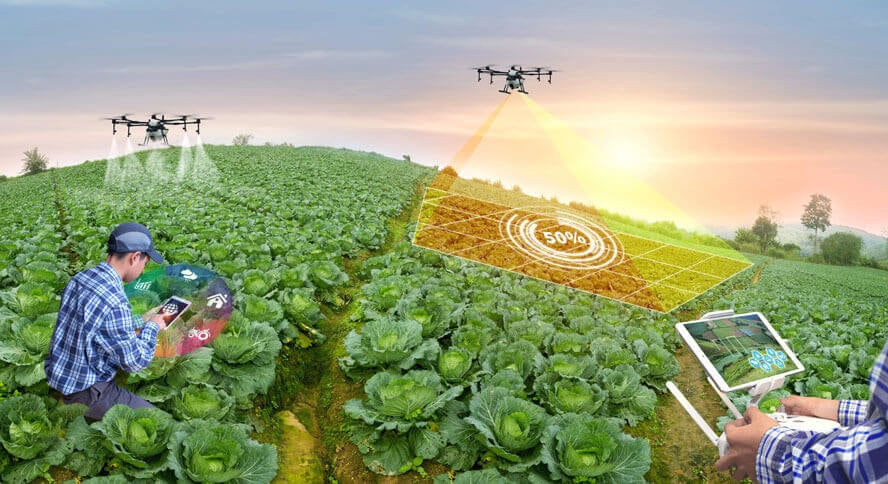
This infinite storage space is the vital foundation for Artificial Intelligence (AI) and Machine Learning algorithms to operate smoothly.
The analytical power of the cloud yields outstanding real-world performance metrics:
Forecasting and diagnosis: AI autonomously analyzes historical data to forecast yields, diagnose early crop diseases, and calculate optimal harvesting times.
Loss minimization: Coordinating resources based on cloud-driven insights helps agricultural organizations reduce post-harvest losses by an average of 15%.
Input optimization: Practical applications record that farms utilizing cloud and AI systems have successfully slashed water usage by up to 96% and fertilizer application by 40%, while simultaneously boosting overall productivity.
How does 24/7 data transparency protect the integrity of export brand values?
To bypass the stringent inspection barriers of the EU and US, agricultural products must possess the capability to "self-prove." Cloud computing reshapes the entire supply chain by providing end-to-end visibility at a micro-level:
Digitizing farming logs: Completely replacing easily misplaced manual logbooks. Every intervention in the growth process (fertilizer volume, pesticide application, transit conditions) is digitized into immutable data records.
Global traceability: International trade partners, retailers, and regulatory agencies can securely access the system to trace the origin of agricultural products online 24/7 from anywhere in the world.
Absolute transparency in information flows serves as a robust "shield" that helps enterprises confidently pass periodic legal audits, fortify consumer trust regarding food safety, and elevate the brand's premium positioning on the international stage.
What are the optimal cloud models for agriculture and how does IPSIP Vietnam fulfill these architectural demands?
There is no single cloud solution that fits every scenario. Depending on the scale and sensitivity of the data, agricultural enterprises require a flexible deployment strategy. The most highly effective models currently include:
Infrastructure as a Service (IaaS) & Software as a Service (SaaS): Deploying farm management applications directly on world-leading cloud platforms like AWS, Microsoft Azure, or Google Cloud to harness massive computational power.
Hybrid Cloud / Multi-Cloud Models: Allowing businesses to retain highly sensitive data on secure private servers while pushing massive datasets (Big Data) to the public cloud for AI analysis.
However, migrating a colossal IoT data collection system to the cloud without disrupting current harvesting cycles is a challenging "technical debt." Instead of struggling internally, enterprises can leverage the multi-platform cloud capabilities of IPSIP Vietnam.

Information on the application of Cloud Computing in Agriculture
Field/application | Technologies used | Benefits | Challenges/risks |
Centralized farm data management | Cloud computing | Faster and smarter decision-making; centralizing weather, soil, growth, and equipment performance data in a single location. | Rural network connectivity; data security and privacy. |
Livestock health and behavior monitoring | IoT, Wearable sensors, Edge computing | Early detection of health issues; improved animal welfare; optimization of breeding programs and dietary rations. | Initial investment costs; technical expertise requirements for system operation. |
Smart irrigation and resource management | IoT, Cloud-based analytics | Reducing water usage by up to 96%; reducing fertilizer use by approximately 40%; increasing resource efficiency. | Sensor reliability; integration of data from multiple disparate sources. |
Precision agriculture | Satellite, Drones/UAVs, AI, Variable rate technology (VRT) | Real-time crop health monitoring; precision zone fertilization and spraying; increased yields and reduced input waste. | Hardware and infrastructure costs; cybersecurity risks and cyberattacks targeting control systems. |
Hyperlocal weather forecasting | Edge computing, Cloud computing | Providing accurate forecasts for individual fields; optimizing timing for irrigation, spraying, and harvesting; reducing risks from extreme weather. | Accuracy of forecasting models; requirements for continuous real-time data processing. |
Agricultural supply chain optimization | Cloud computing, Traceability systems | Enhancing traceability and food safety; reducing spoilage during transportation; connecting farmers directly with buyers. | Standardization and data interoperability among supply chain stakeholders. |
Robotics and autonomous farming systems | AI, Computer vision, Robotics | Automating seeding, weeding, and harvesting; reducing labor costs; ensuring consistency in crop establishment. | High equipment investment costs; technical expertise limitations for maintenance. |
Farm financial and economic management | SaaS (Software as a service) | Approximately 30% reduction in IT costs; more accurate farm economic forecasting; streamlined financial operations. | Misconfiguration risks leading to financial data exposure/leaks. |
IPSIP's elite team of experts (holding prestigious certifications such as AWS Solutions Architect) not only consults but directly designs Serverless and Cloud-native architectures strictly optimized for the agricultural sector. Notably, IPSIP provides a strict commitment to Migration with Zero Downtime—ensuring that the farm's IoT sensor data is continuously transmitted without a single second of interruption during the entire transition. Enterprises can flexibly select a Hybrid deployment (with direct Chief Project support) or a Full Remote management model, heavily optimizing initial investment costs.
Why should enterprises choose solutions from IPSIP Vietnam to establish a secure Cloud infrastructure?
Moving vital farming databases into cyberspace demands an architecture that is not only highly available but also absolutely secure to prevent the leakage of commercial trade secrets. Originating with over 15 years of experience (from France), the IPSIP Vietnam ecosystem is positioned as a premier strategic partner, sharply understanding the challenges of infrastructure modernization for enterprises.
IPSIP's technical operational capacity is globally validated through the most rigorous information security standards, including ISO 27001:2022 and SOC 2 Type II. By providing specialized Cloud Computing solutions combined with continuous 24/7 monitoring via the Security Operations Center (SOC) and Network Operations Center (NOC), IPSIP commits to maintaining absolute stability for the enterprise's data streams, day and night. The accompaniment of over 80 senior experts will help agricultural organizations completely relieve the burden of "technical debt," confidently digitizing their farms to conquer the global market.
-------------------
References:
Deployflow - 7 Ways Cloud Computing is Transforming Agriculture
Saiwa - Cloud Computing in Agriculture | The Future of Farming
GigaCloud - Cloud for Agriculture - Enhancing Farming Efficiency


