
Cybersecurity Outsourcing: Cost-Effective & Secure Solutions for 2026

In 2026, as digital transformation accelerates, data has become the core factor determining a business's operational capacity and competitiveness. However, this is accompanied by a rapid increase in cyber risks, Ransomware attacks, and AI-driven phishing vulnerabilities, forcing many businesses to rethink how they protect their critical systems and information.
According to reports from Statista, global cybercrime damages are expected to continue rising sharply, putting businesses on "red alert."

The question for managers is no longer "Should we secure our systems?" but "How do we secure them effectively with an optimized budget?". For many businesses, especially SMEs (Small and Medium Enterprises), building a dedicated in-house team is a difficult economic puzzle.
Under pressure from increasingly complex threats, cybersecurity outsourcing is becoming a practical solution to help businesses maintain safety and system stability.
What is Cybersecurity Outsourcing?
Cybersecurity Outsourcing (also known as Managed Security Services - MSS) is a form of partnership where a business hires a specialized third-party provider to manage and operate all or part of its information security system.
Instead of purchasing equipment and recruiting experts, businesses leverage the resources, technology, and professional processes of Managed Security Service Providers (MSSPs). Depending on their needs, businesses can choose periodic Pentesting services or full-package operations.
Real-world example: A Fintech company with 50 employees in Ho Chi Minh City, instead of paying 100-150 million VND/month for a 3-person IT Security team, chooses a managed SOC (Security Operations Center) package. This unit monitors the company’s entire system 24/7, detects early signs of intrusion, and handles them immediately at only 1/3 of the cost.
![[2026] The RAM & GPU Crisis: A Strategic IT Infrastructure Roadmap for Businesses](https://static.wixstatic.com/media/a35390_6ace29fbcd7a44a998efdeb32e70c245~mv2.jpg/v1/fill/w_1408,h_768,al_c/a35390_6ace29fbcd7a44a998efdeb32e70c245~mv2.jpg)
Comparison: Outsourcing vs. In-house Team
The following comparison table offers a comprehensive overview to support businesses in their decision-making process:
Criteria | Cybersecurity Outsourcing (MSSP) | In-house Team |
Cost | Low & Flexible (Monthly) | Very High (Salary, infrastructure) |
Skills | Diverse experts (Pentest, SOC, IR) | Usually specialized in 1-2 areas |
Active time | 24/7/365 | Usually office hours only |
Technology | Modern, constantly updated | High investment costs for equipment |
Readiness | Immediate deployment | Time-consuming hiring & training |
Who Should Prioritize Cybersecurity Outsourcing?
SMEs & Startups: Limited financial resources but possessing valuable customer data.
Digital Transformation Enterprises: Moving infrastructure to the Cloud and needing Cloud Security solutions.
Finance, Healthcare, E-commerce: Industries requiring the highest level of system availability per government decrees.
Businesses without in-house IT expertise: Need to focus their resources on core business activities.
Checklist: 6 Criteria for Choosing a Reputable MSSP
Experience & Portfolio: Have they worked with clients in your industry?
Professional SOC System: The provider must have a standard, operational SOC.
SLA Commitment: Response time (e.g., Detect in 5 mins, Resolve in 30 mins).
Technology Stack: Do they use top-tier solutions like CrowdStrike or Fortinet?
Technical Support: Ability to provide on-site support for serious incidents.
Transparency: Clear and detailed periodic threat reports.

Strategic Benefits of Outsourcing at IPSIP Vietnam
Outsourcing IT security is not just a temporary fix but a sustainable value:
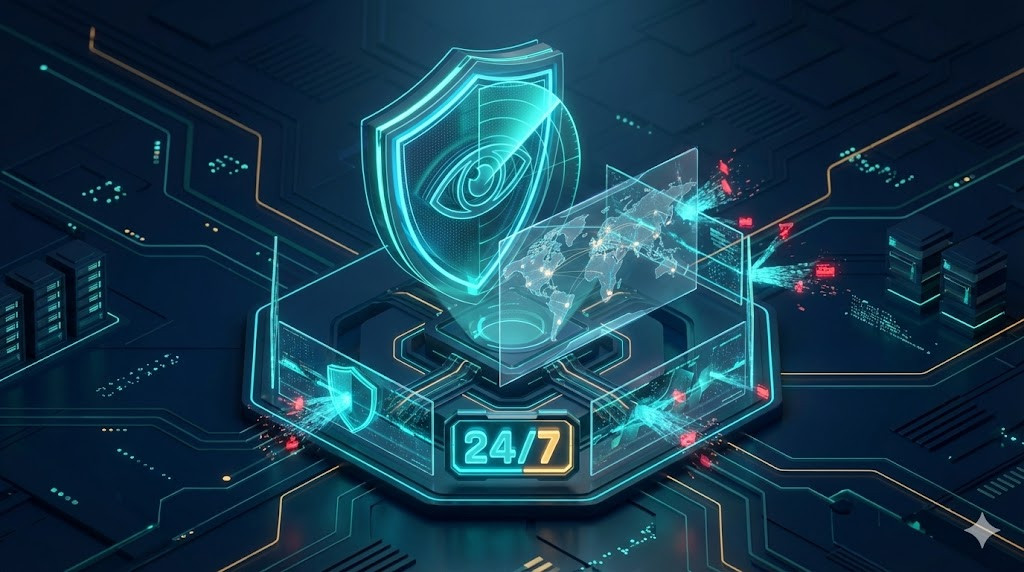
24/7 Monitoring (SOC): Systems are guarded around the clock, including holidays, through a professional Security Operations Center model.
Access to Latest Tech: Professional units always update the most advanced security technologies like Zero Trust Architecture or AI Threat Hunting.
Rapid Deployment: Instead of taking 6 months to recruit and install, businesses can set up a defense system in just 1-2 weeks.
Compliance: IPSIP Vietnam helps businesses meet strict standards such as ISO 27001, SOC 2 Type II, PCI DSS, or the Vietnam Cybersecurity Law.
Legal Risk Mitigation: When an incident occurs, the Incident Response (IR) team helps recover data and minimize reputational and financial damage.
Security Service Standards at IPSIP Vietnam
In the Vietnamese market, choosing a provider goes beyond technology—it requires an understanding of local infrastructure and regulations. IPSIP Vietnam sets new standards through:
Comprehensive Security Ecosystem: Beyond SOC monitoring, IPSIP focuses on Incident Response and deep Vulnerability Assessment (Pentest).
Local Expert Team: Language advantages and on-site presence reduce response times by 50% for attacks targeting Vietnamese infrastructure.
Legal Compatibility: Ensuring all data storage and processing strictly comply with Decree 13/2023/ND-CP on personal data protection.
Cybersecurity outsourcing is no longer a trend; it is a necessity for survival in 2026. By choosing the right partner, businesses protect their data assets and free up resources for breakthrough business goals.
IS YOUR SYSTEM TRULY SECURE?
1. Does outsourcing lead to data leaks?
Reputable providers sign strict NDAs. Data is encrypted and monitored under ISO 27001 standards, ensuring IPSIP only intervenes in security-related flows.
2. Do SMEs really need to outsource?
Yes. SMEs are often "easy targets" for hackers. Outsourcing provides enterprise-grade protection at a fraction of a full-time IT salary.
3. Should I keep internal IT staff?
Yes. The MSSP team coordinates with your internal IT. Internal IT understands business logic, while the MSSP provides deep security expertise.
4. What determines the cost?
Usually based on the number of Endpoints, Cloud infrastructure scale, and support level (8/5 or 24/7).


