
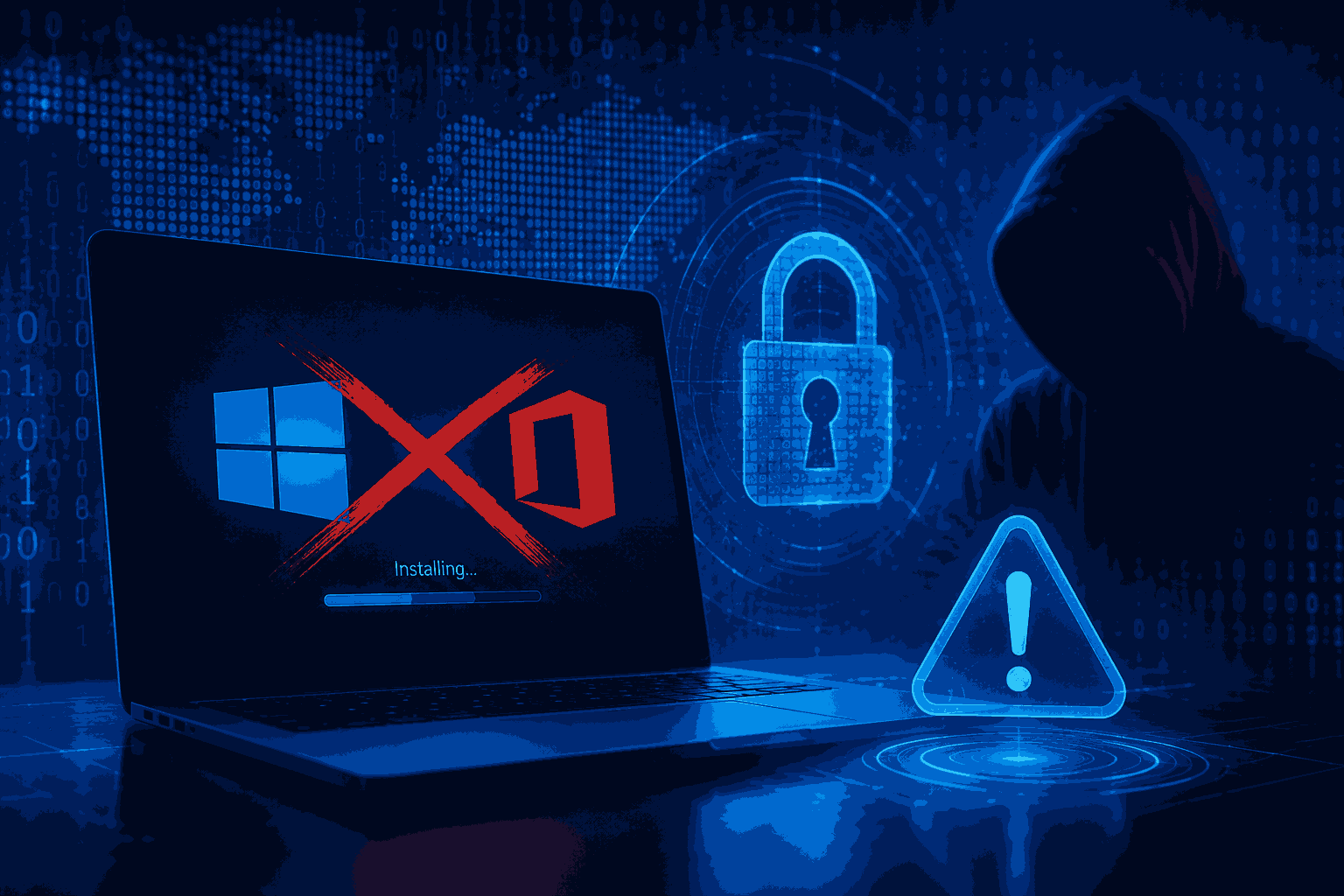
Loss of data due to the habit of using cracked software

Although copyright enforcement has been tightened over the years and was recently addressed in the Cybersecurity Law 2025 (effective from July 1, 2026), installing pirated software or using cracking tools (crack) remains a "hard-to-break habit" for many users, organizations, and businesses in Vietnam.

The misguided cost-saving habit of many businesses
In fact, at the level of individuals, households, or small and micro enterprises, the use of unlicensed software remains widespread.
Sharing his thoughts on this issue, Mr. Ngo Tran Vu, Director of NTS Security Company, pointed out a very common paradox: many entities are willing to spend massive amounts of money to invest in machinery, hardware equipment, or office decoration. However, when it comes to paying a few million VND for legitimate licenses for operating systems or core office applications, they hesitate significantly and turn to free pirated downloads. This short-term cost optimization mindset inadvertently sows the seeds for future cybersecurity disasters.
The dangerous nature behind cracking tools
In reality, there is no such thing as a "free lunch." To illegally use commercial software, users are forced to rely on cracking tools. These tools are often disguised as compressed files (.rar, .zip) or executable files (.exe, .bat). In essence, to break through copyright protection layers, these files must interfere deeply with the system. During this process, the Windows protection system is disabled, or users themselves are required to manually turn off antivirus software to complete the installation.
The moment the protective shield is lowered, the computer is left wide open to attacks. Cybersecurity experts state that most cracking files floating around the internet today are pre-infected with malware.
A prime example is the WinRAR data compression software. If users employ a pirated or outdated version that lacks updates, cybercriminals only need to disguise malware as a quotation file sent via Zalo or email. When the victim opens the file, the malware automatically extracts itself and infiltrates the system without triggering any warnings. Since pirated software cannot connect to the developer to download patches, the victim's computer is easily compromised, allowing hackers to gain remote control.

Alarming numbers regarding malware infections
Many business owners remain confident that their computers running pirated software have "seen no issues yet." However, data from the security firm Kaspersky exposes a worrying reality. In 2025 alone, up to half of all users in Vietnam faced on-device security threats, equivalent to nearly 110 million recorded instances.
Most notable is the surge of spyware (Spyware) targeting domestic organizations. With a 78.8% spike (reaching 191,976 cases), Vietnam is currently the most heavily affected region in Southeast Asia by this type of malware. On average, thousands of silent espionage campaigns target businesses every day.
Unlike ransomware (Ransomware), which typically locks computers immediately to demand a ransom, Spyware chooses to remain dormant silently. They covertly log keystrokes, take screenshots, steal bank account information, and scrape all login data saved on browsers like Chrome or Coc Coc. Combined with sophisticated phishing campaigns such as "ClickFix" or the Atomic Stealer info-stealing malware, with just a single click to install free software, an entire business's trade secrets and funds can evaporate.
Clearly, data is the lifeblood of every organization in the digital age. Trading the safety of an entire system just to save a few million VND on software licenses is a highly risky move. It is time for users and businesses to change their habits, proactively equip themselves with genuine software, and regularly update it to protect themselves against increasingly sophisticated traps in cyberspace.


Comments