
Does using a VPN make you impossible to hack? A comprehensive analysis of enterprise security boundaries

Yes. Using a VPN can still lead to hacker attacks if your device, account, or IT infrastructure has security vulnerabilities. VPNs only encrypt data in transit between the user and the server; they cannot detect malware, prevent phishing, protect against stolen accounts, or monitor unusual system behavior.
According to the Verizon Data Breach Investigations Report (DBIR), the majority of current data breaches stem from credential theft, vulnerability exploitation, and human error, rather than network traffic eavesdropping. This shows that VPNs are still an important component, but only one layer in a multi-layered defense architecture (Defense in Depth), not a comprehensive cybersecurity solution.
In the era of Hybrid Work and decentralized cloud infrastructures, deploying a Virtual Private Network (VPN) has become the default operational standard for global enterprises. A dangerous misconception exists among administrators that once the VPN tunnel is established, the entire corporate data flow is placed within an impenetrable fortress. However, confusing network transport encryption with comprehensive endpoint security is creating systemic vulnerabilities.
Modern cyberattacks rarely target the encryption algorithms themselves; instead, threat actors exploit the human element, misconfigured protocols, and unmanaged endpoints. This comprehensive architectural analysis, aligned with international cybersecurity frameworks, dismantles the myths surrounding VPN capabilities. It provides a strategic roadmap for organizations to transition from legacy perimeter defenses to robust Zero Trust Network Access (ZTNA) and Endpoint Detection and Response (EDR) paradigms.
What specific threats does a Virtual Private Network actually mitigate?
A VPN effectively neutralizes transit-based threats by encrypting traffic and masking IP addresses. It provides a robust perimeter defense against Man-in-the-Middle (MitM) attacks, IP-based tracking, and DNS hijacking.
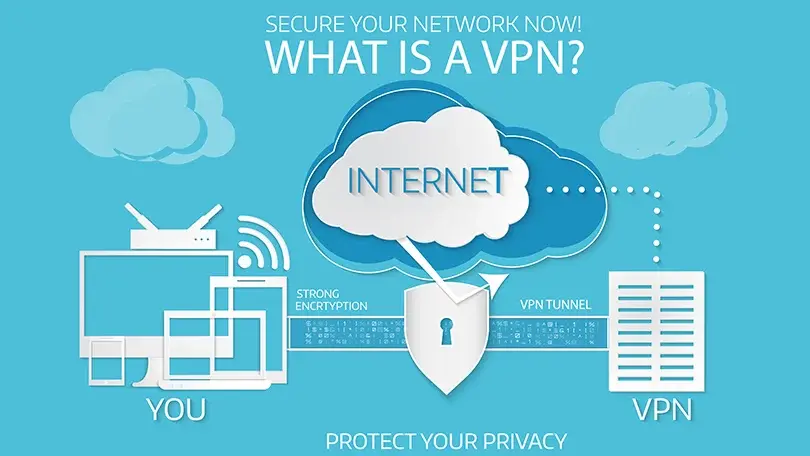
To understand the protective scope of a VPN, it is essential to analyze its two core technical functions: establishing an encrypted tunnel for data in transit and masking the real public IP address of the device.
Neutralizing Man-in-the-Middle (MitM) Attacks: Public Wi-Fi networks in airports or cafes are prime targets for packet sniffing. A VPN encrypts all outgoing data using military-grade standards (such as AES-256-GCM). Even if a threat actor intercepts the network traffic, they only retrieve decipherable ciphertext, rendering the stolen data completely useless.
Preventing Remote IP Exploitation and DDoS: A public IP address serves as a digital identifier, allowing hackers to probe for open ports or launch Distributed Denial of Service (DDoS) attacks,. By routing traffic through a remote server, the VPN replaces the real IP address. Any targeted DDoS flood will bombard the hardened infrastructure of the VPN provider rather than paralyzing the enterprise's local network.
Defeating DNS Hijacking and Spoofing: Cybercriminals often manipulate Domain Name System (DNS) lookups to redirect users to malicious phishing portals. Enterprise-grade VPNs route all DNS queries through their own encrypted resolvers, bypassing the Internet Service Provider (ISP) and completely eliminating network-level redirection risks.
Why is believing "does using a VPN make you impossible to hack" a dangerous myth?
Believing a VPN guarantees total security is a dangerous misconception because it only secures the network perimeter, leaving devices completely exposed to endpoint attacks. A VPN cannot block malware, phishing attempts, or unauthorized access via stolen credentials.

The search for the ultimate security tool often leads to overconfidence. A VPN only encrypts data in transit; it possesses absolutely no visibility into the payload's safety or the identity of the person operating the keyboard.
Malware, Ransomware, and Viruses: A VPN does not filter malicious files. If an employee downloads an infected PDF or clicks a malicious link, the malware is securely encrypted and transported straight into the corporate network. Endpoint security (EDR) is required to stop device-level execution, a function completely outside a VPN's architecture.
Phishing and Social Engineering: When an employee is tricked into entering credentials on a highly convincing fake login page, the VPN diligently encrypts that transmission. The sensitive data travels securely directly to the hacker's command-and-control server. Social engineering targets human psychology, bypassing cryptographic defenses entirely.
Compromised Credentials and Keyloggers: If a device is infected with a keylogger, passwords are stolen at the hardware level before encryption even begins. Furthermore, if valid credentials are leaked on the Dark Web, an attacker can log into the enterprise VPN portal. The system will authenticate the hacker as a legitimate user, granting full access to internal databases.
Vulnerabilities in IoT Ecosystems: Smart office devices, IP cameras, and factory sensors rarely support native VPN client installations. These Internet of Things (IoT) devices act as unprotected gateways. Hackers exploit their weak firmware to penetrate the local network and perform lateral movement toward core servers.
How are modern enterprises breached despite active VPN connections?
Cybercriminals bypass VPN encryptions by exploiting human vulnerabilities, compromised devices, and network misconfigurations. Common breach scenarios involve credential stuffing, infected personal devices (BYOD), and rogue Wi-Fi networks.
Security Operations Centers (SOC) continuously record incidents where the VPN itself became the conduit for the breach. Understanding these scenarios is critical for risk management:
The "Credential Stuffing" Intrusion: An employee reuses a password across a personal forum and the corporate VPN. After the forum is breached, hackers utilize automated scripts to inject those credentials into the enterprise VPN gateway. The network is breached without a single cryptographic algorithm being broken.
Cross-infection via Bring Your Own Device (BYOD): A remote worker connects to the corporate VPN using a personal laptop infected with a Remote Access Trojan (RAT). The VPN establishes a secure, trusted bridge between the infected device and the enterprise's central servers, allowing the malware to spread laterally and execute a ransomware payload across the entire organization,.
The "Evil Twin" Wi-Fi Trap: An executive connects to a rogue Wi-Fi hotspot mimicking a hotel's network. Before the VPN application can initiate its encrypted tunnel, the device sends unencrypted background data. The hacker intercepts the traffic during this brief exposure window, capturing session cookies and authentication tokens.
Why is traditional VPN architecture failing in Hybrid Work environments?
Legacy VPNs operate on "implicit trust," granting overly broad network access once a user authenticates. In a hybrid work setting, this flat network approach allows malware to spread laterally across the entire enterprise infrastructure.
Traditional cybersecurity relies on the "Castle-and-Moat" model, where the VPN acts as the sole drawbridge. The fatal flaw of this architecture is Implicit Trust. Once a user bypasses the VPN gateway, they are granted broad, network-level access. If a single endpoint is compromised, the lack of internal segmentation allows the threat to traverse the entire network unimpeded.
Additionally, forcing remote traffic to backhaul through a central corporate data center via a VPN just to access cloud-based SaaS applications creates severe bottlenecks and latency. This degrades operational efficiency without proportionately increasing data security.
VPN vs. ZTNA vs. Zero Trust: Which architecture secures the future?
While VPNs provide perimeter-level encryption, Zero Trust Network Access (ZTNA) and comprehensive Zero Trust frameworks secure individual applications and continuously verify user identities.
To eliminate the risks of implicit trust, global security standards mandate a transition toward the Zero Trust philosophy.
Core Security Criteria | Legacy Virtual Private Network (VPN) | Zero Trust Network Access (ZTNA) | Comprehensive Zero Trust Framework |
Trust Model | Implicit Trust: One-time authentication grants persistent access to the network segment. | Never Trust, Always Verify: Continuous authentication required per individual application session. | Holistic philosophy covering Network, Devices, Applications, Data, and Human Identity. |
Access Scope | Network-level access. High risk of lateral movement if an endpoint is compromised. | Application-level access. The underlying network infrastructure remains completely invisible to the user. | Strict enforcement of the Principle of Least Privilege across all digital touchpoints. |
Device Posture Evaluation | Minimal to none. Any device with valid credentials can connect. | Continuously assesses device health (OS updates, active antivirus) prior to granting access. | Requires centralized Mobile Device Management (MDM) integrated with real-time EDR isolation. |
Visibility & Monitoring | Extremely limited. Granular monitoring of internal traffic is difficult post-authentication. | High. Generates detailed logs of specific application interactions. | 360-degree visibility. North-South and East-West traffic is analyzed by AI-driven 24/7 SOC centers. |
You may like:

What are the fatal deployment mistakes that compromise VPN security?

Poor configuration and outdated protocols can instantly render a VPN useless. Failing to implement DNS leak protection, Multi-Factor Authentication (MFA), and a reliable Kill Switch exposes enterprise data to immediate interception,,.
A poorly deployed VPN offers a false sense of security. System administrators must rigorously audit against these critical misconfigurations:
Relying on Obsolete Protocols: Utilizing outdated protocols like PPTP or L2TP is catastrophic. These standards contain well-documented vulnerabilities that modern computational power can crack in minutes. Organizations must enforce modern protocols like WireGuard, OpenVPN, or IKEv2.
DNS Leaks: A DNS leak occurs when a device routes its DNS queries outside the encrypted VPN tunnel directly to the ISP. Analysis reveals that up to 44% of VPN users suffer from DNS leaks, exposing their entire browsing history and destination domains to third-party surveillance.
Absence of Multi-Factor Authentication (MFA): Protecting an enterprise gateway with merely a static password guarantees a future breach. Without MFA, compromised credentials immediately grant hackers administrative access to the network.
Disabled Kill Switch Mechanisms: A Kill Switch automatically severs the internet connection if the VPN drops unexpectedly. Without it, the device reverts to an unencrypted public connection, instantly exposing sensitive data in transit,.
Enterprise VPN security assessment checklist
A secure VPN infrastructure requires military-grade encryption, rigorous access controls, and transparent logging policies. Evaluating the system through a strict checklist ensures no technical blind spots remain,,.

Chief Information Security Officers (CISOs) must demand the following standards from their network infrastructure:
[ ] Encryption Standards: The system must utilize the AES-256-GCM cipher algorithm combined with Perfect Forward Secrecy (PFS) to ensure encryption keys are continuously rotated,.
[ ] RAM-Only Server Architecture: Outsourced VPN nodes must run on volatile memory (RAM-only). Upon a server reboot, all data is instantly eradicated, preventing physical extraction by malicious actors or unauthorized entities.
[ ] Audited No-Logs Policy: The provider must strictly adhere to a Zero-Logs policy, ensuring no browsing history or origin IP addresses are recorded, verified through independent third-party audits,.
[ ] Robust Anti-Leak Configurations: Mandatory enforcement of DNS Leak Protection, WebRTC leak prevention, and an active Kill Switch at the client level,.
[ ] Identity and Access Management (IAM): Full integration with enterprise directories enforcing mandatory MFA for all connections.
Why are EDR and 24/7 SOC the mandatory layers for true incident response?
Because VPNs cannot detect active threats on devices, Endpoint Detection and Response (EDR) and a 24/7 Security Operations Center (SOC) are essential to identify and isolate malware or unauthorized access in real-time.
If a VPN is the armored transport vehicle on the internet highway, EDR and SOC are the armed security forces stationed inside the destination vault.
EDR Neutralizes Endpoint Threats: When malicious payloads bypass the VPN via social engineering, EDR solutions continuously monitor system behavior. The moment a file attempts unauthorized encryption (Ransomware behavior) or keystroke logging, the EDR instantly terminates the process and isolates the infected machine from the corporate network.
24/7 SOC Illuminates Blind Spots: Cybercriminals leverage automation to strike during off-hours. A 24/7 SOC utilizes AI-driven User and Entity Behavior Analytics (UEBA) to detect anomalies—such as a VPN login originating from an impossible geographical location or massive midnight data exfiltration. Expert analysts intercept these anomalies and execute real-time incident response, neutralizing the threat before damage occurs.

Why should enterprises choose comprehensive cybersecurity solutions from IPSIP Vietnam?
Addressing complex vulnerabilities requires a holistic ecosystem rather than fragmented tools. Partnering with IPSIP Vietnam provides a tailored, international-standard defense architecture backed by top-tier experts and continuous 24/7 monitoring.

Originating from France with a legacy of over 15 years of experience, IPSIP Vietnam delivers enterprise-grade security infrastructures globally certified under ISO 27001:2022 and SOC 2 Type II,,. The strategic advantage of IPSIP lies in its comprehensive Managed Service Provider (MSP) capabilities:
Continuous 24/7 Monitoring & Response: Threats are detected and neutralized instantly through the seamless integration of the Network Operations Center (NOC) and the 24/7 Security Operations Center (SOC),.
Top-Tier Expert Force: Backed by over 80 senior technology experts holding elite certifications (AWS, Fortinet, SentinelOne, Wallix), IPSIP guarantees a 99.99% system uptime and unparalleled incident remediation,.
360-Degree Defense Ecosystem: From deploying the proprietary FlexSecure360 endpoint protection platform to providing outsourced IT Support/Helpdesk services, IPSIP ensures organizations are fully shielded against ransomware, credential theft, and compliance risks,.
VPNs have never been the problem. The issue lies in the fact that many businesses inadvertently view VPNs as the end point of their security strategy, rather than just the starting point. As most modern attacks shift their focus to identity, endpoints, and access, simply protecting the connection is no longer enough to mitigate risk. The true value of a VPN is only realized when it becomes a component in a multi-layered defense architecture, combined with Zero Trust, EDR/XDR, SIEM, and SOC to continuously verify, monitor, and respond to threats.
------------------------
Frequently Asked Questions (FAQ)
Does using a VPN make you impossible to hack if I use public Wi-Fi?
No. While a VPN secures your connection against Man-in-the-Middle attacks on public Wi-Fi by encrypting the traffic, it cannot stop hackers from compromising your device if you download malware or fall for a phishing scam while connected to that network,,.
Can a VPN protect my business from ransomware?
VPN does not protect against ransomware. It only encrypts data in transit. If an employee executes a ransomware payload, the VPN will encrypt the connection, but the malware will successfully execute and lock the files on the endpoint device. Antivirus or EDR software is required to stop ransomware.
Why is DNS leak protection important for a VPN?
Without DNS leak protection, your device may send domain name requests outside the encrypted VPN tunnel directly to your ISP. This allows third parties or hackers monitoring the network to see exactly which websites you are visiting, defeating the privacy purpose of the VPN.
What happens during an Evil Twin Wi-Fi attack?
In an Evil Twin attack, a hacker sets up a rogue Wi-Fi network with a legitimate-sounding name (e.g., "Airport_Free_WiFi"). If a user connects and transmits data before the VPN is turned on, the hacker can steal unencrypted credentials during that brief window.
Is it safe to use a free VPN for enterprise access?
No. Free VPNs often utilize outdated, easily compromised encryption protocols like PPTP. Additionally, many free services sustain their business model by logging user activity and selling data to third parties, which violates severe enterprise data privacy compliance.
Can a VPN secure IoT devices like office security cameras?
Most IoT devices do not have an operating system capable of running a native VPN client. To secure these devices, network administrators must deploy a router-level VPN or utilize network micro-segmentation to isolate IoT devices from core corporate servers.
----------------------
Reference sources:
Can VPNs be hacked? How to stay safe in 2026: https://surfshark.com/blog/can-vpns-be-hacked
Does a VPN Protect You From Hackers? The Complete Honest Answer: https://www.cyberfenceplatform.com/blog/does-vpn-protect-against-hackers
Does a VPN Protect You From Hackers?: https://windscribe.com/blog/does-a-vpn-protect-you-from-hackers/
Duyệt web riêng tư và VPN có thực sự an toàn?: https://www.kaspersky.com.vn/resource-center/definitions/how-does-vpn-keep-me-safe-online
VPN có an toàn và bảo mật không? VPN an toàn đến mức nào?: https://www.viettelidc.com.vn/tin-tuc/vpn-co-an-toan-khong


