Expert decodes the latest cybersecurity law: How businesses can establish a "dual shield" in 2026

According to the Vietnam Cybersecurity Magazine (July 2026), the Personal Data Protection Law (effective January 1, 2026) and the Cybersecurity Law 2025 (effective July 1, 2026) officially form a "dual shield" in the digital space. Cybersecurity expert Ngo Minh Hieu warns that organizations severely lack data auditing capabilities and incident response readiness to comply with this latest cybersecurity law.
In just 5 minutes of reading this article, you will grasp the complete legal compliance roadmap and core technical standards needed to turn complex regulations into practical defensive barriers for your organization. Possessing a legal framework on paper is not enough; according to cybersecurity expert Ngo Minh Hieu, if an organization does not know what data it is storing and who is accessing it, legal compliance is merely a formality. From mid-2026, mistakes in data governance will be accompanied by strict legal sanctions.
This article details the impact of the new legislation and provides immediate actionable solutions to protect your digital assets.
Why do the latest cybersecurity law and the Personal Data Protection Law create a "dual shield"?
These two laws operate in parallel and strictly complement each other. While the Personal Data Protection Law lays the legal foundation for privacy, the Cybersecurity Law 2025 creates a technical defense layer to ensure those rights are strictly enforced in reality.
This combination brings comprehensive benefits in the digital space.
For citizens, personal data is strictly controlled from collection to usage, enhancing the prevention of scams and identity theft using AI or deepfake technologies.
For organizations, applying the latest cybersecurity law provides a clear legal corridor, defining responsibilities in cross-border risk management. This is especially crucial when organizations need to establish governance standards to protect their brand reputation.
To better understand how these regulations impact long-term development strategies, businesses can refer to IPSIP's in-depth analysis on applying the Cybersecurity Law 2025 to build trust in Vietnam's digital space, thereby grasping how to turn legal compliance into a core competitive advantage.

Personal Data Protection Law (Jan 1, 2026): Manages the lifecycle of collecting, processing, and sharing user information.
Cybersecurity Law 2025 (July 1, 2026): Establishes defense standards, preventing cyberattacks, AI manipulation, and deepfakes.
The Personal Data Protection Law and the Cybersecurity Law 2025 form a "dual shield" protecting the digital space. Applying the latest cybersecurity law helps prevent AI and deepfake scams while providing a clear legal corridor for businesses to safely join global supply chains.
What is the biggest gap in enforcing the Vietnam Cybersecurity Law 2026?
The biggest gap lies not in legal documents but in the actual implementation capacity of organizations. Most entities currently lack dedicated personnel, data auditing processes, and the capability to detect data leaks.
Many organizations operate blindly: they cannot identify where personal data is stored, who has access, or which third parties it is shared with. Negligence in partner management creates extremely severe risks. Actual reports from our conversation history indicate that cyber espionage groups like Mustang Panda or APT32 are fully exploiting supply chain vulnerabilities by distributing malicious files (.lnk, .chm) containing PlugX malware, taking control of devices and manipulating applications like Zalo and Viber.
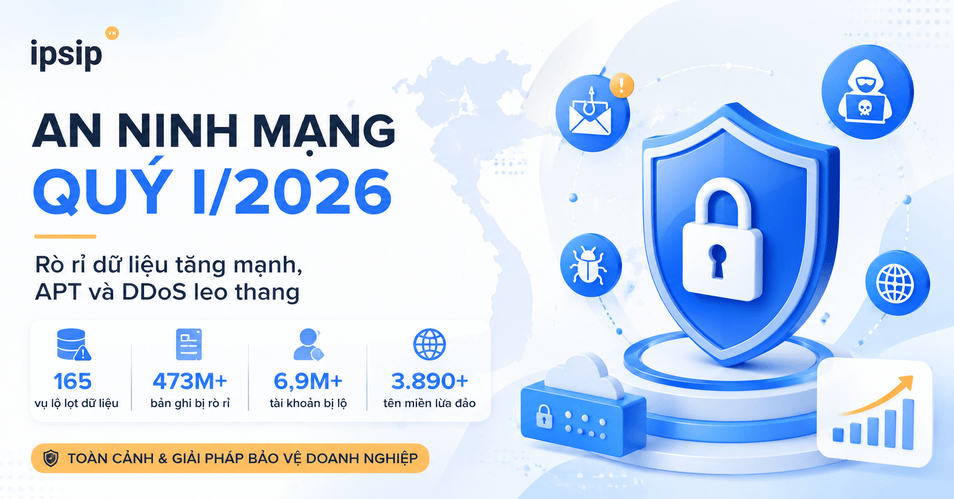
Looking back at this systemic picture through the Q1/2026 Vietnam cybersecurity report, it is clear that supply chain attack risks directly affect 34% of domestic businesses. The lack of partner review processes is turning technical vulnerabilities into legal compliance disasters.
Below is a Checklist of steps organizations need to take to close the enforcement gap:
[ ] Clearly identify what constitutes personal data versus sensitive data.
[ ] Establish a dedicated point of contact explicitly responsible for information security.
[ ] Build internal processes and strict access control mechanisms.
[ ] Implement encryption for critical data right from the storage phase.
[ ] Prepare a robust incident response plan for potential data leaks.
What regulations must startups and cross-border platforms comply with?
Startups processing sensitive data must establish protection processes right from the early development stages. Meanwhile, cross-border platforms must face three layers of pressure: legal, technical, and market-driven, to maintain their right to do business in Vietnam.
Even with a 5-year initial administrative exemption, startups in fintech, healthtech, or edtech cannot afford to be negligent because they handle highly sensitive data (financial, health records, children's data). If they wait until they grow large to protect it, data may have passed through dozens of intermediary layers and become untraceable.
For foreign enterprises, regulators will demand transparency in data collection and monitoring of data flows via API systems. This is also the core of risk management mentioned in the analysis of the Cybersecurity Law for FDI enterprises: Challenges and Solutions in 2026, where IPSIP points out that any cross-border entity wishing to operate in Vietnam must equip secure server control systems, optimize OS security, and absolutely respect the data rights of domestic users.
Organization Type | Data Processing Characteristics | Mandatory Compliance Requirements |
Startups (Fintech, Healthtech) | Processing financial, healthcare, and sensitive educational data. | Risk assessment and access privilege management parallel to product development. |
Cross-border platforms / FDI | Processing massive data flows of Vietnamese citizens via international servers. | Transparent collection, periodic reporting, and being subject to API and targeted advertising system audits. |
How should businesses implement a Secure System Deployment?
To comply with the latest cybersecurity law, businesses must integrate technical solutions into their core infrastructure, including encrypting data at rest, optimizing OS Security (OS Hardening), and applying a Zero Trust architecture for all connection points.

When facing cyber espionage or supply chain attack threats, a paper-based security policy is worthless if the server system exposes default connection ports. Guidelines for Secure System Deployment require IT teams to limit the privileges of all third-party partners strictly.
OS Hardening: Close unnecessary network ports and disable redundant services to minimize the attack surface.
Access Control: Establish multi-factor authentication (MFA) and authorize based on the principle of Least Privilege.
Data Encryption: Ensure all critical databases are encrypted to international standards, even when at rest.
IPSIP Expert Perspective
The imminent enforcement of these two critical laws is not just a legal event; it also exposes severe technical vulnerabilities within the networks of Vietnamese enterprises.
Root Cause: Most organizations lack comprehensive visibility into their digital assets; they do not know where data resides and possess extremely loose Identity and Access Management (IAM).
Attack Vector: Ambiguity in authorization creates loopholes for supply chain attacks (APT groups spreading PlugX malware), data leaks from internal users, or deepfake identity spoofing.
Business Impact: Data leaks will not only lead to business disruption but will also subject organizations to massive fines for violating the latest cybersecurity law.
Lessons Learned: Legal compliance is not about appointing personnel on paper, but an ongoing operational capability. Organizations must combine auditing processes with automated monitoring technologies.
1. Cybersecurity solutions that businesses can implement themselves.
Right now, organizations need to establish a strict Zero Trust architecture, applying the Least Privilege principle for all users and third-party partners. IT administrators must build a detailed Asset Inventory to map data flows. Implementing multi-factor authentication (MFA), OS Hardening, and a 3-2-1 Backup strategy are mandatory actions to ensure information is not compromised.
2. Cybersecurity solutions from IPSIP
To translate the requirements of the latest cybersecurity law into a practical operational technical system, businesses need to integrate specialized technology solutions from IPSIP:
To meet data classification requirements and instantly prevent unauthorized sharing of sensitive information, businesses need to deploy Data Encryption / Data Loss Prevention (DLP). DLP technology plays a core role in helping organizations comply with the Personal Data Protection Law, completely stopping employees from inadvertently leaking customer records.
To prevent data from being stolen due to lingering system vulnerabilities, organizations must periodically conduct Vulnerability Assessment. The assessment report will provide a comprehensive picture of weaknesses in operating systems and network devices before APT groups can exploit them through the supply chain.
Particularly, to comply with the requirements for continuous monitoring and incident response capabilities, businesses need to be equipped with a Security Operations Center (SOC 24/7) system. IPSIP's SOC experts will collect logs 24/7, analyze abnormal behaviors, automatically alert, and isolate unauthorized accesses, ensuring the organization's "dual shield" operates seamlessly at all times.
According to a survey conducted in early 2026, over 82% of Vietnamese businesses are aiming to establish a Security Operations Center (SOC) this year.
----------------------
Frequently Asked Questions (FAQ)
When does the latest cybersecurity law 2025 officially take effect?
The Cybersecurity Law 2025 officially takes effect on July 1, 2026, acting as an additional technical defense layer alongside the Personal Data Protection Law (effective January 1, 2026).
What is the "dual shield" concept in the digital space?
The "dual shield" is the combination of the Personal Data Protection Law (laying the legal foundation for privacy) and the Cybersecurity Law (creating the technical defense layer to enforce those rights in reality)
Are startup businesses completely exempt from data protection regulations?
The law provides a 5-year administrative exemption for small businesses and startups. However, startups handling high-risk data (healthtech, fintech) must still establish compliance processes from the very beginning.
How can cross-border platforms be forced to comply with the latest cybersecurity law?
Regulators create three layers of pressure: legal (mandatory transparent reporting), technical (inspecting data flows, API monitoring), and market-driven (forcing respect for Vietnamese users).
Why is data auditing necessary before deploying security tools?
Because if an organization does not know what data it collects, where it is stored, who has access, and who it is shared with, legal compliance is merely a formality with no real protective effect.
---------------------------
References
Chuyên gia: Hai đạo luật sẽ tạo nên “lá chắn kép” bảo vệ người dân trên không gian số: https://tapchianninhmang.vn/chuyen-gia-hai-dao-luat-se-tao-nen-la-chan-kep-bao-ve-nguoi-dan-tren-khong-gian-so