
Evaluating IT Helpdesk quality: It's time to shift from SLA to XLA

For decades, the Service-Level Agreement (SLA) has been considered the backbone and the ultimate standard for evaluating IT helpdesk quality. However, as technology increasingly dictates the direct productivity of employees, dry technical metrics no longer reflect the full picture. The shift toward measuring actual user experiences through an Experience Level Agreement (XLA) is becoming a revolution, helping organizations truly understand the effectiveness behind their reporting numbers.
Why a 99.9% uptime is no longer enough for evaluating IT Helpdesk quality?
Traditional methods for evaluating IT helpdesk quality have historically focused strictly on technical outputs. They record system uptime, response times, and the mean time to repair (MTTR). Even if a system achieves a 99.9% uptime or the IT team responds to a support ticket in just 5 minutes, these indicators remain completely "blind" to a core element: how users actually feel about their digital experience.
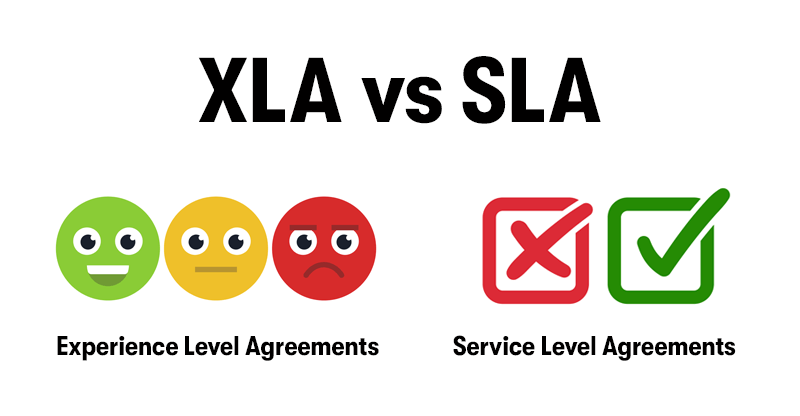
In the era of flexible working, hardware metrics cannot answer whether a technological tool is helping or hindering an employee's ability to get their job done.
The limitations of SLAs and the "Watermelon Effect"
The biggest weakness of an SLA is that it often ignores the actual feelings and productivity of the end user. This leads to an extremely common phenomenon when evaluating IT helpdesk quality, known as the "Watermelon Effect".
The Watermelon Effect occurs when SLA reports consistently meet their targets—showing a perfect green exterior—but the actual user experience is terrible and filled with frustration, representing the red interior.
A classic example: An SLA report notes that IT resolved 95% of support requests within 24 hours. However, user satisfaction surveys return a score of 5 out of 10 because the solution provided by IT was a temporary patch, the error recurred, and their work was severely disrupted.
What is an XLA (Experience Level Agreement)?
An Experience Level Agreement (XLA) is a set of metrics and commitments designed to ensure that the end-user experience is consistently positive and meets (or exceeds) expectations.
If an SLA is the language of machines and technology, an XLA is the language of humans. Instead of merely measuring whether a system is running, XLAs focus on assessing the ease of using a service, the emotional impact, and overall satisfaction.

When using XLAs for evaluating IT helpdesk quality, businesses capture the true value: whether employees can work seamlessly and whether IT support is contributing to broader business outcomes.
The benefits of introducing XLAs into your evaluation standards
Applying XLAs to your measurement framework is not just a change in tools; it brings profound business impacts:
Optimizing Employee Productivity: Data from the 2025 Global IT Experience Benchmark Report indicates that adopting human-centric IT makes users 24% happier and increases productivity by 26%. Notably, XLAs help IT Helpdesks uncover unexpected bottlenecks—such as the fact that a mere 13% of incident tickets cause up to 80% of the total lost productivity time for all employees.
Driving Business Results: An employee with a positive Digital Employee Experience (DEX) will have the resources to serve customers better, thereby directly elevating the Customer Experience (CX).
How to integrate XLAs into your current IT Helpdesk workflow
To achieve a comprehensive framework for evaluating IT helpdesk quality, organizations should not completely discard SLAs. Instead, they must run both metrics in parallel. Here are four practical steps:
Combine Objective Data with Subjective Perception: Organizations need to merge remote technical monitoring data (like error rates and latency) with short surveys to assess the human impact of an incident.
Measure Time to Productivity and Satisfaction (ESAT): Instead of solely relying on the Net Promoter Score (NPS), which doesn't truly reflect the frustration of a crashed computer, IT Helpdesks should use the Employee Satisfaction Score (ESAT). Alongside this, measure the Time to Productivity to accurately identify the hours wasted due to technological disruptions.
Integrate into Daily Troubleshooting: When closing a ticket, short experience surveys (micro-surveys) should be sent automatically to confirm whether the solution actually restored the user's productivity. This prevents scenarios where a technical ticket is closed, yet the user is still unable to work.
Continuous Improvement Through Feedback Loops: Simply collecting data is not enough. XLA data must be fed into regular reports and review meetings to find the root causes of issues (e.g., hardware optimization, slow Wi-Fi updates, or lack of documentation).

An SLA with 99.9% uptime might satisfy system engineers, but only an XLA will truly satisfy the users. The perfect combination of SLAs and XLAs is the key to accurately evaluating IT helpdesk quality, shattering the "Watermelon Effect," and helping the IT department truly become a strategic partner that drives business performance.
FAQ (Frequently Asked Questions)
What is the core criterion for evaluating IT helpdesk quality by modern standards?
Alongside technical SLA metrics (such as response and resolution times), modern IT Helpdesk quality must be evaluated through the lens of XLAs. This includes measuring Employee Satisfaction Scores (ESAT) and the time it takes to restore productivity after an incident.
What is the "Watermelon Effect" in IT Helpdesk?
This is a phenomenon where the IT Helpdesk's SLA measurement reports always hit their targets (green on the outside), but in reality, users are extremely frustrated and experience numerous work disruptions (red on the inside).
How can we integrate XLAs into the Helpdesk system without causing overload?
Businesses should start by selecting 3-5 core experience metrics. Utilize short, automated micro-surveys sent immediately after a ticket is closed, and set up simple dashboards to track data trends instead of creating cumbersome measurement processes.
-------
References:
Report: "Global IT Experience Benchmark Report 2025" - HappySignals.
Article: "Experience Level Agreements (XLA) to Improve Daily Digital Workplace Outcomes" - TaUB Solutions.
Article: "The Watermelon Effect in IT: Why SLAs Fail & How XLAs Fix It" - ALVAO.
Article: "The Rise of Experience-Level Agreements (XLAs) in Practice: A Deep Dive into ITSM Transformation" - Ivanti.


