
What Is API security? A complete guide for modern applications

API Security is the practice of protecting application programming interfaces (APIs) from unauthorized access, data breaches, and cyberattacks. As APIs power modern web, mobile, and cloud applications, securing them has become a critical part of every organization's cybersecurity strategy.
APIs have become the backbone of today's digital ecosystem. From e-commerce platforms and mobile banking to ERP, CRM, and SaaS applications, APIs enable seamless communication between systems. However, every exposed API also creates a new attack surface. A single misconfigured endpoint or weak authentication mechanism can expose sensitive business data or allow attackers to compromise critical systems. Understanding API Security is therefore essential for organizations that want to build secure and resilient applications.
What is API security?
API Security refers to the policies, technologies, and best practices used to protect APIs from unauthorized access, abuse, and security vulnerabilities. Rather than focusing only on web servers or applications, API Security safeguards the communication layer that connects users, applications, and backend services.
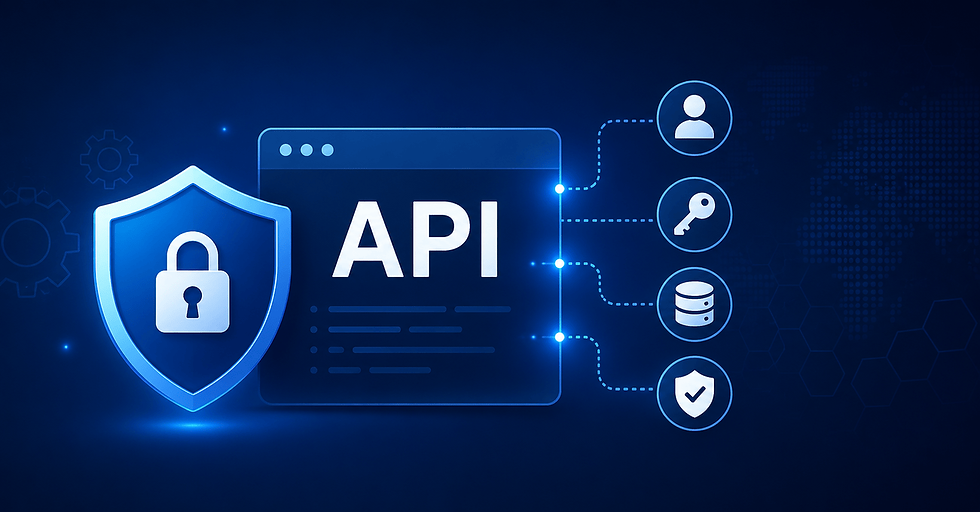
A comprehensive API Security strategy typically includes:
User authentication
Authorization and access control
Data encryption
Rate limiting
API monitoring and threat detection
Protection against the OWASP API Security Top 10 risks
Why are APIs a prime target for cybercriminals?
APIs often process highly sensitive information, including customer records, financial transactions, authentication tokens, and business data. When security controls are weak, attackers can bypass the application's user interface and communicate directly with backend services.
The eBook highlights several high-profile security incidents where exposed or improperly secured APIs resulted in massive data breaches. These cases demonstrate that API Security is no longer optional—it is a fundamental requirement for modern software development.
What are the core components of API security?
Protecting APIs requires multiple layers of defense rather than relying on a single authentication mechanism.
Key components include:
API Gateway
Authentication
Authorization
Rate Limiting
CORS Protection
Bot Detection
Data Masking
Fraud Detection
API traffic monitoring
Security assessments aligned with the OWASP API Security Top 10.
OAuth 2.0 vs. Basic authentication: What's the difference?
Basic Authentication relies on a username and password to authenticate requests. While simple to implement, it becomes risky if credentials are compromised.
OAuth 2.0 provides a more secure approach by issuing short-lived access tokens with defined scopes and permissions. This minimizes credential exposure while enabling fine-grained access control across applications and services.
The eBook also explains OAuth 2.0 authorization flows, JWT, OpenID Connect (OIDC), Client Credentials, Refresh Tokens, and other authentication models commonly used in modern APIs.
📥 Download the Free End-to-End API Security eBook
If your organization develops or manages:
Websites
Mobile applications
ERP systems
CRM platforms
Public or partner APIs
Microservices
this eBook provides valuable practical guidance.
Inside the eBook, you'll learn about:
API Gateway architecture
OAuth 2.0
OpenID Connect (OIDC)
JWT authentication
Role-Based Access Control (RBAC)
Rate Limiting
Data Masking
OWASP API Security Top 10
End-to-end API protection strategies.
Who should read this eBook?
This guide is designed for:
CTOs and CIOs
Security Managers
DevOps Engineers
Backend Developers
Solution Architects
Organizations building digital platforms
Teams developing web, mobile, or cloud-native applications
Across its 32 pages, the eBook provides a practical overview of API architecture, authentication, authorization, threat protection, and modern API security best practices.
IPSIP Expert insight

Organizations can immediately improve API security by implementing the following best practices:
Adopt OAuth 2.0 or OpenID Connect instead of Basic Authentication where appropriate.
Apply the Principle of Least Privilege to API authorization.
Configure Rate Limiting to mitigate abuse and denial-of-service attempts.
Maintain a complete inventory of all active APIs.
Regularly assess APIs against the OWASP API Security Top 10.
When should you engage security experts?
As APIs become business-critical, internal reviews alone may not be enough to uncover complex vulnerabilities such as broken authentication, authorization flaws, insecure business logic, or API-specific attack vectors.
IPSIP's Penetration Testing (Pentest) service helps organizations perform comprehensive API security assessments, identifying exploitable vulnerabilities before attackers can take advantage of them. API penetration testing covers authentication mechanisms, authorization controls, business logic, and the most common risks identified in the OWASP API Security Top 10, providing actionable recommendations to strengthen your application's security posture.


