Cybersecurity’s Dark October: PHP2Shell, Ransomware, Supply-Chain Attacks, and Major Breaches

The final days of October 2026 brought an unusually dense series of cybersecurity incidents, including PHP2Shell vulnerabilities, ransomware targeting Synology NAS devices, software supply-chain attacks, identity-related breaches, and major security events involving companies such as GMO Internet and Binance. The broader concern is not simply the number of incidents, but how many different layers of the modern technology stack were affected at the same time.
Runtimes, open-source dependencies, cloud environments, storage systems, identity platforms, developer tools, and privileged endpoints all appeared in the same threat landscape. This is the period as a “dark October” for cybersecurity, with multiple high-impact vulnerabilities and breaches disclosed within roughly ten days.

IPSIP also tracked several developments from the same period in its cybersecurity news roundup for October 26–November 1, helping place these incidents within a broader pattern rather than viewing each event in isolation.
1.PHP2Shell put enterprise PHP environments back under pressure
One of the most significant developments was PHP2Shell, a name used for CVE-2026-109618 and CVE-2026-109619. The vulnerabilities were disclosed and patched on October 21 and, under certain PHP web-request configurations, could potentially allow unauthenticated remote code execution.
Because the issue affects the PHP runtime layer, organizations need to understand which versions of PHP are actually running across web servers, containers, legacy systems, and unmanaged applications.
IPSIP Vietnam examined this issue in more detail in its analysis of PHP2Shell and whether patching alone is enough for enterprise environments.

Security and IT teams should confirm that the active runtime has been updated, affected workers or services have restarted correctly, and logs have been reviewed for indicators of exploitation that may have occurred before remediation.
2.GMO faces a $50 Million ransom demand
On October 25, Japan-based GMO Internet disclosed a cyberattack that potentially affected tens of thousands of servers. The attackers demanded $50 million and threatened to publish customer data if payment was not made.
GMO refused to negotiate and advised users to scan for malware, back up data, and disconnect affected devices where necessary to reduce further impact.
If attackers steal data before disrupting systems, an organization may face several forms of pressure at once: operational downtime, potential data disclosure, reputational damage, legal exposure, and financial extortion.
GMO also appears in IPSIP Vietnam’s broader analysis of Japanese companies compensating users following major cybersecurity incidents.

That case highlights how the financial consequences of a cyber incident can extend far beyond infrastructure recovery. Customer compensation, legal obligations, crisis communications, forensic investigation, and long-term remediation may all contribute to the total impact.
For that reason, organizations should not treat backup as their only ransomware defense.
3.Railway and LiteLLM show why software supply chains remain high-Vvalue targets
Railway disclosed unauthorized access to part of its internal environment on October 20, creating potential exposure risks around API keys and customer credentials.
Around the same period, LiteLLM, an open-source library used to connect applications with multiple AI models, was reportedly affected by a software supply-chain attack involving malicious packages distributed through package repositories and container channels.
The risk is not limited to a single compromised package. One malicious dependency can potentially give attackers access to multiple downstream environments.
Organizations also need visibility into which dependencies are in use, which repositories are trusted, where secrets are stored, and what a compromised token can actually access.
4.The DHS data exposure reinforces the importance of identity security
On October 28, Distributed Denial of Secrets reported that information associated with more than 40,000 employees of the U.S. Department of Homeland Security and related agencies had been exposed.
Reported data included names, job titles, phone numbers, email addresses, and office information. The incident reinforces a broader enterprise security trend: identity systems have become one of the most valuable attack surfaces.
IPSIP Vietnam’s guide to Identity and Access Management explores how organizations can structure these controls more systematically.
5.Synology NAS ransomware shows why old vulnerabilities can still cause new damage
Toward the end of October, users in multiple regions, including Vietnam, reported Synology NAS systems with encrypted files renamed using the .L0CK3D extension.
Synology confirmed attacks targeting systems running outdated DSM versions and advised users to update affected devices.

The important point is that some of the underlying vulnerabilities had already been patched.
If an Internet-exposed appliance remains outdated, attackers may continue exploiting it long after remediation guidance has become available.
IPSIP Vietnam published a dedicated analysis of C3RB3R ransomware targeting Synology NAS devices, including the .L0CK3D indicator and response considerations for organizations dealing with encrypted NAS systems.
For businesses using NAS devices as backup repositories, the incident also reinforces a basic principle: A backup is only useful if attackers cannot compromise both production systems and the recovery environment at the same time.
6.WordPress remains a high-volume target sfter security updates
On October 28, WordPress released version 7.1.4 to address multiple security vulnerabilities, including issues related to remote code execution, cross-site scripting, denial of service, information disclosure, and privilege handling.
Once security patches are released, attackers often begin scanning for systems that remain vulnerable. This makes the period immediately following public disclosure particularly sensitive. WordPress environments also illustrate why application security cannot focus on the CMS core alone.
7.Binance highlights the risk of privileged endpoints
Another major late-October incident involved Binance. On October 29, the company disclosed that it was investigating a cybersecurity incident involving approximately $6.3 billion in digital assets identified as affected.
Early reporting suggested that a device belonging to the engineering or technical team may have been compromised, potentially allowing attackers to misuse access that was already trusted by internal systems.
IPSIP Vietnam analyzed the incident separately in Binance investigates cyberattack affecting $6.3 billion in crypto assets.

If they compromise an endpoint, session, or credential that already has legitimate access to a critical environment, they may be able to operate through trusted paths.
For this reason, endpoint protection, PAM, privileged session monitoring, and access segmentation should be treated as parts of the same control model rather than independent security products.
What should businesses prioritize after cybersecurity incidents October 2026?
There is no single security control that addresses every incident described above. However, several priorities apply across most enterprise environments:
Validate asset inventory and actual software versions. Focus especially on PHP runtimes, NAS devices, CMS platforms, cloud workloads, developer environments, and Internet-facing systems.
Prioritize vulnerabilities based on exploitation risk. CVSS alone should not determine remediation order when active exploitation or business-critical assets are involved.
Protect privileged accounts and endpoints. Combine MFA, PAM, EDR/XDR, segmentation, and session monitoring.
Secure API keys, tokens, and secrets. Cloud, CI/CD, developer tools, and automation platforms should be treated as sensitive credential environments.
Control software dependencies and trusted package sources. Reduce exposure to malicious or compromised supply-chain components.
Separate backup access from production credentials. Test restore procedures regularly rather than assuming backups will work during an incident.
Continue threat hunting after patching. Installing a security update does not prove that exploitation did not occur before remediation.
Monitor identity activity. Authentication anomalies, unusual session behavior, and privilege escalation can provide early indicators of compromise.
How can businesses turn these incidents into practical security improvements?
The incidents from October point to a common challenge: organizations rarely fail because of one missing security product. More often, risk builds across several gaps at once - an unpatched system, an overprivileged account, an unmanaged endpoint, an exposed credential, or activity that remains undetected for too long.
A practical response should therefore start with visibility and prioritization. Businesses need to understand which Internet-facing assets are exposed, which vulnerabilities require immediate remediation, where privileged access exists, and whether security teams can detect suspicious activity across endpoints, identities, cloud environments, and critical infrastructure.
For organizations that do not have enough internal resources to operate these controls continuously, an external security operations partner can help close some of those gaps without replacing the internal IT or security team.
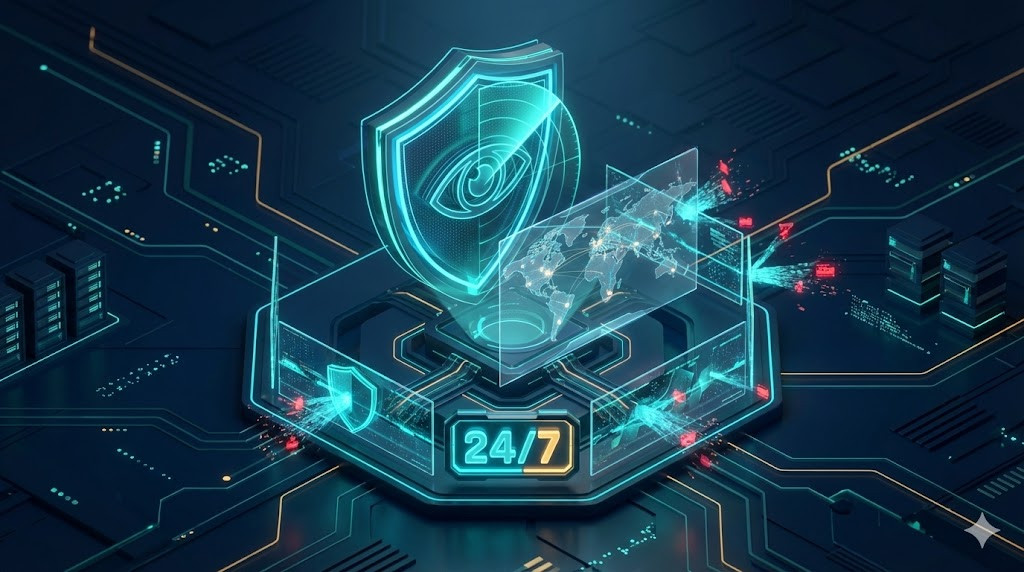
IPSIP Vietnam supports this approach across several layers. Businesses that need continuous monitoring and incident escalation can explore SOC 24/7 services.
Where privileged accounts represent a significant risk, PAM/Bastion can provide an additional control layer around administrative access and privileged sessions. Organizations that want to identify exploitable weaknesses before attackers do can also consider Penetration Testing as part of a broader security validation program.
The goal is not to deploy every security service at once. A more effective approach is to identify the highest-risk gaps first - whether that is visibility, privileged access, vulnerability exposure, or incident response readiness and then build controls around the areas most likely to create business impact.

Organizations faced vulnerabilities in widely used runtimes, software supply-chain attacks, ransomware, credential theft, identity compromise, and privileged endpoint risk almost simultaneously.
The techniques were different, but the underlying requirement was the same: Businesses need to know what assets they operate, which versions are running, who has access to them, and what abnormal activity is occurring across the environment.
Rerferences